Modelling in South Korea 2026: Agencies, Visas & Pay
By Alina Pavlushova · Modelling coach
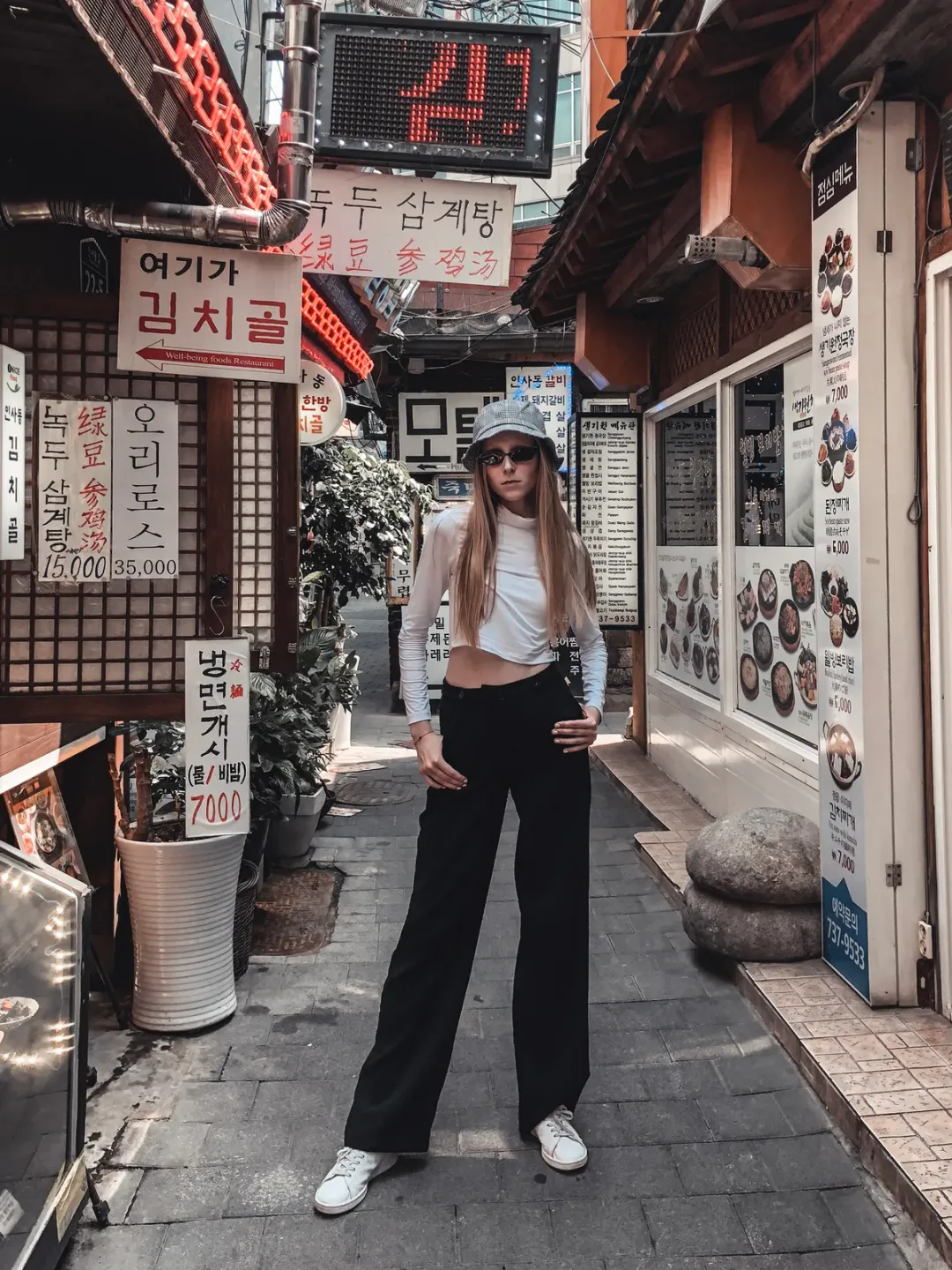
From the outside, modelling in South Korea looks like a ready-made dream: K-pop, K-dramas, flawless gloss wherever you turn. Over the years I have sent more than a few of my students off to Asia, and Korea almost always provokes the same reaction — first excitement, then bewilderment. The picture promises a beautiful story you slip into the moment you land. In reality, for a foreign model the industry runs on something far drier than that: a system with almost no room for improvisation or happy accidents, one that prizes not a single striking feature but a whole, polished, disciplined image.
I am not here to talk anyone out of it — the Korean market has handed plenty of my students a strong portfolio and experience that paid off for years afterwards. But you should go in with your eyes open. So I will walk you through everything a foreign model needs to know before she travels: the requirements for look and height, how agencies and contracts work, the visa question (E-6 or C-4), what people really earn, and who this market suits and who it does not. That, in short, is what modelling in South Korea is really like for a foreigner — and how to go in without ending up disillusioned.
Korea hires an image, not just a face
The first thing I explain to every model before Korea: here agencies assess neither your face nor your height in isolation, but a complete image. That, more than anything, is what sets the Korean market apart from most others.
At castings and on shoots, casting directors look at proportion — the ratio of leg length to torso, neck and the rest, not just the number on the tape. They read your movement: how you carry yourself, how at ease you are with a camera rather than a stage. Delivery and expression count — the ability to work your face subtly, without forcing it. And finally the overall aesthetic: groomed, clean, minimal.
You can be very beautiful by European standards and still be wrong for the Korean market. What works here is not beauty in the abstract but a specific visual code — you either fit it or you do not. That is no verdict on your looks; it is simply a different brief. I always tell my students: don't stretch a Korean "no" over your whole career — the same girl Seoul passes on is often in steady demand in Milan, or in commercial work back home.
What modelling work actually awaits a foreigner in Korea
Strip away the romance and a model's core work in Korea is commercial and beauty shoots. In practice that means:
- shoots for cosmetics and skincare brands (K-beauty is a vast segment);
- ad campaigns for Korean labels, catalogues, online shops and home-shopping channels;
- lifestyle and digital content, advertising, a great deal of video;
- beauty shoots where the skin and a soft, natural delivery are everything.
What there is noticeably less of than you might dream: classic runway work (Seoul Fashion Week runs twice a year and is far more intimate than the "big four" of Paris, Milan, London and New York) and editorial for the major international titles. The catwalk exists, but for most foreign models it is not the main living.
In Korea a model more often works as part of a brand's aesthetic concept. Fitting the brief matters more than standing out — and you have to accept that in advance, or it stings. When a girl tells me "but I came to show myself," I tell her straight: here your job is to show the product, not yourself — and the girls who take that calmly are the ones who work noticeably more.
The model and the K-pop idol are not the same job
This is the confusion I meet most often, so let me say it plainly: a modelling contract is not a route into K-pop. Idols come out of a years-long trainee system inside entertainment labels (SM, JYP, HYBE and others), selected on vocals, dance, visuals and temperament, training for years before they debut. Modelling is direct, short-term work based on your look, usually a couple of months, through a modelling agency rather than an entertainment one. Two different professions, two different industries. If you go in as a model expecting to become an idol, disappointment is all but guaranteed.
What look and casting type are in demand in Korea
The Korean market is one of the most selective in the world. The brief here is specific: a slim, light body with no pronounced muscle or bulk; long proportions; a clean face with soft, neutral features; youth and freshness in the delivery. The baby-face look — an open, youthful face without hard edges — is often in demand.
A word on what counts as non-negotiable rather than a nice-to-have:
- well-kept, healthy skin — effectively a requirement;
- minimal make-up at castings, where agencies look at you as you are;
- neat, healthy hair;
- no aggressive sexuality in the delivery.
Korea does not care for force. Even models with strong, expressive features have to be able to go quiet — to present themselves softly and with restraint. That is part of the K-beauty aesthetic and part of the working culture at the same time. In my experience this is exactly where the girls stumble: back home they were praised for being bold and full of character, and Korea asks for the precise opposite — and that change of register is something you have to switch on in yourself deliberately.
Even so, this is the market norm, not the law. For beauty, digital and social-media content the demands on height and type are gentler. I will come to height separately below, because the figures here tend to be exaggerated in both directions.
Height, age and measurements in Korea: the real numbers
There is a lot of myth here, so stick to facts and skip the hard promises.
| Parameter | Practical guide |
|---|---|
| Height (women) | from roughly 172 cm at the very least; for runway and high fashion 175–180 cm is more usual |
| Height (men) | from roughly 180 cm at the very least; for fashion 183–190 cm is more usual |
| Beauty / digital / social media | height requirements noticeably gentler; sometimes shorter for a strong profile |
| Age | scouting usually from 16; under 18 only with parental or guardian consent and the extra protections owed to a minor |
I deliberately write 172/180 as the floor, not the median. If your height is closer to the minimum, that is not a no — but it is more realistic to plan for beauty, digital and commercial work than for the runway. And on age: under 18 you are a minor, written parental consent is required, and the contract and working conditions are regulated more strictly — don't brush that aside, even if an agency is rushing you. When a model comes to me sitting right on the height floor, I don't talk her out of it — I quietly point her at beauty and commercial work instead, and those same few centimetres stop being a sentence.
The work visa for Korea: C-4 or E-6, and why a tourist visa is a risk
This is probably the most important section, and the one usually flattened into a single line: "you need an E-6." In truth it is a little more nuanced than that, and a mistake here is expensive.
For legal paid modelling work you need a work visa. The category depends not on your preference but on the length of the contract.
| Visa | When | Notes |
|---|---|---|
| C-4-5 (short-term employment) | paid work up to 90 days | by its own definition covers modelling and advertising shoots; this is what short two-to-three-month contracts usually run on |
| E-6 (E-6-1, artists and models) | engagements longer than 90 days | a long-stay visa with real gatekeeping: it often wants either experience (around three years is commonly cited) or qualifications plus sponsorship from a registered Korean agency |
A typical placement for a foreigner runs about two to three months (often 60–90 days) and sits right on the 90-day line that decides whether you are on a C-4 or an E-6. So "E-6 is the model visa" is imprecise: short jobs usually run on a C-4-5, long ones on an E-6. The invitation and visa paperwork are handled by the host agency, and it must be licensed. The visa is the first thing I ask my students to check — which category they're actually being brought in on, and who is issuing the invitation — because this is the cheapest place to slip up and the most expensive to untangle afterwards.
Modelling on a tourist visa or visa-free status is illegal. It means deportation, a fine that can reach roughly 30 million won, and a possible entry ban. The inviting party shares the liability.
Immigration rules change, and this is not legal advice. Before you travel, check with a licensed Korean agency and the official sources (HiKorea, and the immigration hotline 1345).
Seoul agencies, mother agencies and the contract: what to read
The contract is where models most often come unstuck, because they sign without looking. Take it calmly.
The fee is usually split between the model and the agency. You will often hear splits like 50/50 or 40/60, where the agency keeps the larger share and deducts costs on top — housing in the model flat, transfers to castings, sometimes visa expenses. That is normal market mechanics, but the actual figures and the list of deductions belong in the contract, not in a verbal promise. And ask whether your mother agency's share sits inside that split or comes on top of it — get the combined figure in writing.
What I always ask you to look at:
- the percentage and exactly what is deducted — flat, transfers, visas, who pays for what;
- the timing and order of payments: money is often handed over in a lump sum at the end of the contract, and you need to know that in advance so you are not left without cash at the start;
- penalties — punitive "service agreements" with fines for turning down a shoot or leaving early should give you pause;
- the mother agency: your own agent back home keeps an eye on the terms from the model's side and steps in during disputes, and for a first trip that sharply lowers the risk;
- licence and reputation — whether the agency has the right to invite foreigners, and what people who have already worked with them say.
Over the years I have noticed one thing: girls don't get burnt on the percentage, they get burnt on the deductions they never asked about up front. The split looks fair, and then half of it quietly disappears into the flat, the transfers and the visa. That is exactly why I insist on it: don't count the split — count what actually lands in your hand once everything is taken out.
How to avoid modelling scams in Korea
The rule I repeat to everyone: a real agency earns a percentage of your fee — it does not take money from you up front. If at the outset you are asked to pay for a "compulsory" portfolio, courses, registration or a guaranteed contract, it is almost always a scam.
Warning signs worth knowing:
- a paid portfolio or paid training as a condition of working together;
- castings via direct messages on social media from vague accounts with no registered company behind them;
- a vague "service agreement" with opaque penalties instead of a proper contract;
- pressure and urgency along the lines of "decide today, the slot is going";
- reluctance to show a licence, past projects or contacts for models who have worked with them.
If I'm honest, of everything on that list it's the rush that worries me most. A proper agency has no problem with your "let me think it over for a day and show the contract to my agent" — but a scammer does, because the whole con depends on you not having time to check. That is how I coach my students: read any "decide right now" as a reason to slow down, not to hurry.
Safety on set is part of this too. A legitimate agency does not summon you to a "shoot" in a private flat with no crew, and does not blur the line between modelling and escort work. If something feels wrong, that feeling is itself the reason to walk away.
How to become a model in Korea: the path step by step
For all its selectiveness, the Korean market is not closed to a foreigner without experience — it books heavily on type. If you are wondering what it actually takes, here is the honest sequence:
- Be realistic about look and height — measure yourself against the brief above, and weigh beauty and digital work if you are near the height floor.
- Prepare clean snaps and accurate, current measurements (the kit below).
- Find a mother agency at home that will represent you and place you abroad.
- Through it, sign with a licensed Korean agency that can legally invite a foreigner.
- Sort the right visa for the contract length (C-4-5 or E-6) — the host agency handles the paperwork.
- Read the contract properly before you sign: percentage, deductions, payment timing, penalties.
None of these steps needs an expensive folder or a "course." It needs honest material, a vetted agency and a clear head about the terms.
Comp card, polaroids and measurements for Korean agencies
You can start with no portfolio at all — good news for anyone wondering how to become a model in Korea with no experience. What matters is presenting yourself properly. The basic kit asked for almost everywhere:
- Snaps (polaroids) — plain photos with no make-up and no retouching, in daylight, in close-fitting plain clothing. Usually front, profile, full length and a close-up of the face, both smiling and not. No editing: the agency needs to see the real you.
- Comp card — if you already have shoots, a few of your strongest frames with current measurements. This is the same "modeling card" agencies the world over ask for (the spelling you will often see in US listings).
- Measurements — height, bust, waist and hip girths, and shoe size, in centimetres, accurate as of today.
- Test shoots — with no experience, a couple of clean tests with a photographer help an agency judge how you read on camera.
Good, honest snaps and accurate measurements often count for more than an expensive glossy folder. This is the first and most important material expected of you. And here is the one thing I drum into my students: shoot your snaps straight — no flattering angle, no holding your stomach in — because the Korean side will measure you again on arrival, and a gap between you and your "pretty" photos dents their trust far more than a couple of centimetres ever would. And so that your snaps and first test shoot work in your favour, start with posing basics — the whole mechanics of the frame is there.
How much do models earn in Korea and how you get paid
Let me be straight with you: Korea is not the most lucrative modelling market, and I will not name a specific salary, because the figures for one and the same person vary several-fold between sources and depend heavily on season, type and agency. Anyone who guarantees you an exact monthly sum is someone I would not trust.
Why Korea is a portfolio market, not a money market
Rates in Korea are often quoted below China's: China tends to be described as a market of volume and high rates (I cover it in my full guide to modelling in China), Korea as a market of image and portfolio. That is only a generalisation — some Korea guides, on the contrary, quote high day rates. So treat it as a tendency, not a rule.
More important than the figure itself is the mechanics of payment, which genuinely shape your life there. You are often paid not straight away but in a lump sum nearer the end of the contract — budget a cushion for the first few weeks. Out of the fee come housing in the model flat, transfers to castings, the agency percentage and sometimes visa costs; all of it shrinks the take-home. And a separate matter: how to move money to your home country. The won can be sent abroad either through international money-transfer services or by bank SWIFT, and each route has its own fee and timeline. Sort that out before you sign, not after.
This is why I call Korea a market of reputation and visual capital. Foreigners come for a strong portfolio that then works for a career in other countries — a perfectly sound, workable goal. Most often the girls who come home happy are the ones who measured this trip not by the sum in their purse but by the frames and the reputation they brought back — over time that pays off far more than the money ever does.
The model flat in Korea: how it actually works
Free housing is another illusion best dispelled in advance. The model flat is usually shared: several models in one flat, and you pay for your bed — often a deduction from your fee, plus a possible deposit and a separate charge for transfers to castings.
For context, Korean renting in general runs on the wolse system (monthly payments with a deposit) and jeonse (a large one-off deposit instead of rent) — the model flat is closer to wolse with deductions. Don't expect a private studio thrown in as a gift: this is working accommodation, and the comfort is basic. Knowing that in advance means you will not be disappointed on arrival. Before she signs, I get my student to ask something simple: how many to a room, is the housing inside the deductions, and exactly what does a bed cost. A reasonable agency answers calmly; if the reply drifts into "we'll sort that out later," that alone should give you pause.
Behaviour, discipline and hierarchy
Korea is a market of firm hierarchy and respect for the process, and that is not merely culture — it is a working requirement. A model is expected to be punctual (lateness reads as disrespect), courteous with the whole team, modest in manner and self-presentation, free of any conflict however small, and able to get on with the task quietly.
A diva temperament kills a career in Korea faster than anything. What is prized here is quiet professionalism and the ability to be part of a team rather than the centre of attention.
Add to that constant readiness. Keep heels in your bag and your phone reachable even on a day off — castings can land out of nowhere. Years of watching my girls taught me this: a reputation here is more often lost on the small things than on the shoot itself — late to a casting, a word out of place with an assistant, a message left unanswered. Korea remembers all of it, and quiet reliability is valued here above any amount of flair.
Language and a day in the life
A common fear is language. In practice, basic English is enough for the work: teams are used to foreign models, and a lot is explained with gestures and by demonstration. Korean is a big plus and a mark of respect, but not a requirement. On set what is mostly expected of you is understanding simple instructions and reacting quickly, not holding a free-flowing conversation. When a student frets that she won't be booked without the language, I reassure her: on set they want a quick response to a simple instruction, not a conversation — and that is plenty to get you calmly through the day.
A model's day is not wall-to-wall glamour. More often it is a string of castings across the city, waiting, travelling, another casting and — occasionally — the long-awaited shoot. Out of roughly forty who turn up to a casting, two or three might be booked; that is the norm, not a fluke. The stamina to hold that rhythm day after day matters more than any gift for a striking walk down the catwalk. When a girl tells me she dreams of Korea for the beautiful life, I walk her through an ordinary day — the metro, the queue at the casting, another casting, waiting on a call. I ask her to picture that, not the glossy cover, because that is what the job actually is.
For a personal account of that routine, read my interview with Ellie about modelling in Seoul. She describes daily castings, exploring the city and gradually settling into life away from home.
Social media as part of the job
In 2026, agencies weigh a model's Instagram on a par with her portfolio: the profile, the tone, the consistency of the content. The digital and social-media shoot segment is growing, and sometimes a strong account is enough for them to book a model who is a touch shorter. How much an agency wants to control your social media varies: some ask you to clear posts with them, some do not. Settle the level of that control in advance and put it in the contract rather than finding out after the fact. I advise my students to tidy the account up before they even apply: clear out the random clutter and keep the tone calm, in line with the Korean look — bookers really do open the profile right there at the casting, and that is part of the first impression, not a pleasant bonus.
The psychology of the market: pressure through silence
On the surface Korea looks gentler than China: shorter shoot days, a calmer pace. But the pressure here is subtler and more constant. Casting directors can simply stop calling you — no explanation, no confrontation. There is almost no feedback: you will not learn why you did not pass a casting. Any departure from the standard is often noticed in an instant.
Korea does not scold — it ignores, and for many that is harder than blunt criticism, because there is nothing to take hold of. Hence the market's chief risk: burnout. The first thing I ask of a student here is a pact with herself: a rejection is no verdict on your looks but a question of the current brief. And separately, on weight: yes, your shape may be monitored, but that is no licence to drive yourself into unhealthy diets. A good manager will protect a model rather than break her health. Look after yourself — that matters more than any contract. I see it in my own girls — the silence cuts deeper than any blunt criticism would. Brace for that before you go, or you will take the quiet personally when it is only the brief of the moment.
Seasonality in Korea: when it is best to go
Korea does have a season. The anchor point is Seoul Fashion Week, traditionally held twice a year, roughly in March and October, which sets the spring and autumn peaks.
| Period | What is happening |
|---|---|
| March – June | spring peak: advertising and fashion campaigns, the most castings |
| September – November | autumn peak: collections, beauty campaigns, run-up to the festive season |
| January – February | winter lull; Seollal (Lunar New Year) falls in mid-February in 2026 |
| August | usually quieter: heat and holidays |
The exact month boundaries are a general pattern, not fixed dates. For a first trip, spring and autumn are ideal: agencies are more actively hunting new faces. I always talk my students out of going in the dead season for the sake of "cheap flights": you will simply sit two months in a rented flat with no castings, running a loss on the housing, and come home disillusioned — saving on the dates here costs you the whole trip.
Who Korea suits, and who it does not
Korea will probably suit you if you are visually minimal and can work in a quiet aesthetic, adapt easily to a team, like structure and clear rules, are ready to learn and to take silent rejections in your stride, and want to build a strong commercial portfolio and reputation.
And it probably will not suit you if you are a vivid fashion diva who lives to express herself, love provocation and extravagance, cope badly with control and limits, expect high fees from your first contract, or want to stay yourself with no filters at all. There is nothing wounding in any of that: I know wonderful models for whom Korea was utterly wrong, and who then bloomed in Milan or in commercial work at home. An honest answer to yourself here saves you both money and nerves.
Is modelling in Korea worth it: my honest verdict
Korea is a market of quiet strength. It does not shout and it does not seduce: it either accepts you or it does not. To those it accepts, it gives an aesthetically strong portfolio, a professional reputation, experience in one of the most disciplined industries in the world, and a solid career foundation.
But all of that goes only to those ready to become part of the system rather than fight it. Approach it consciously — a vetted agency with a mother agency back home, the right visa sorted, the market's rules accepted — and Korea can become one of the most valuable rungs in a modelling career. Go in search of freedom and fast money, and disappointment is all but inevitable. I am for travelling with your eyes open: do that, and this market works in your favour.
Frequently asked questions
Can you become a model in Korea with no experience?
Yes. The market largely books on type, so you can start with no portfolio. What you do need is to present yourself well: clean snaps (polaroids) with no make-up or retouching, accurate current measurements, and ideally a test shoot or two so the agency can see how you read on camera. Experience helps, but a strong, honest set of basics often counts for more than a thin CV.
What is it like to model in Korea as a foreigner?
Less glamorous and more disciplined than the K-pop image suggests. A typical day is a run of castings across the city, a lot of waiting and travelling, and now and then a shoot. Basic English gets you through the work, the pressure comes mostly through silence rather than confrontation, and the real risk is burnout — so treat each rejection as a question of brief, not a verdict on you.
Can you work as a model in Korea without an agency?
Technically yes, but I would not advise it. The Korean market is built on agencies, and without a local representative your access to proper clients and projects is all but closed. An agency also arranges your visa invitation and takes on the legal side. In practice, working without an agency more often means working without protection.
Is it an E-6 or C-4 visa for modelling in Korea?
Both — the category follows the contract length. Up to 90 days of paid work usually runs on the short-term C-4-5 employment visa, which by its own definition covers modelling and advertising shoots; this is what typical two-to-three-month contracts use. Longer than 90 days means an E-6 visa (E-6-1, artists and models), but that one carries serious gatekeeping: it often wants either experience (around three years is commonly cited) or qualifications plus sponsorship from a registered Korean agency.
What happens if you model in Korea without a work visa?
It is illegal, and the consequences are real: deportation, a fine that can reach roughly 30 million won, and a possible entry ban — and the inviting party shares the liability. A tourist or visa-free entry does not cover paid work. Before you travel, check the official sources (HiKorea and the immigration line 1345); the rules change, and this is not legal advice.
What percentage does a Korean agency take, and what is deducted?
You will often hear splits like 50/50 or 40/60, with the agency keeping the larger share. On top of that, housing in the model flat, transfers to castings and sometimes visa costs usually come out of the fee. The exact figures and the full list of deductions should be written into the contract.
What should be written into a modelling contract?
At a minimum: the agency percentage and the full list of deductions (flat, transfers, visas), the timing and order of payments, the terms and size of any penalties, and the contract length. If instead you are offered an opaque contract with vague penalties and much left verbal, that is a reason to be wary.
How do I spot a modelling agency scam in Korea?
The main sign: you are asked for money up front. A real agency takes a percentage of your fee, not a charge for a compulsory portfolio, courses or a guaranteed contract. Be wary if a casting comes through a dubious account in direct messages, the contract is woolly and full of penalties, you are pressured on timing, and they will not show a licence or past projects.
What do I need to send to a Korean agency?
At a minimum, snaps (polaroids) and current measurements. Snaps are taken with no make-up or retouching, in daylight, in close-fitting plain clothing: front, profile, full length and a face close-up, smiling and not. If you have experience, add a comp card and a couple of test shoots. You can start with no portfolio — the market books on type.
What measurements do Korean agencies ask for, and in what units?
Usually height, bust, waist and hip girths, and shoe size, sometimes weight — all in centimetres and kilograms. The measurements must be current, not a year old: at a casting they are easily rechecked, and a discrepancy dents trust.
What is a mother agency and why do you need one?
It is your agency at home, the one that sends you abroad on a contract and represents your interests to the host agency. It helps you read the contract, keeps an eye on the conditions and steps in if disputes arise on the ground. For a first trip a mother agency greatly reduces the risk, which is why I almost always advise going through one.
What height do you need to be a model in Korea?
As a floor, roughly from 172 cm for women and from 180 cm for men. But those are minimums: for runway and high fashion they usually expect taller (women around 175–180 cm, men 183–190 cm). For beauty, digital and social-media shoots the height requirements are noticeably gentler, and sometimes shorter is booked for a strong profile.
From what age do Korean agencies take models?
Scouting usually starts at 16. But under 18 you are a minor: written consent from a parent or guardian is required, and the working conditions and contract are regulated more strictly. That is not a formality — don't ignore it, even if an agency is rushing you.
Do Korean agencies weigh models, and what are the weight expectations?
Shape is genuinely monitored in Korea, and at a casting you may be asked your weight or measurements. But that is no licence to drive yourself into harsh diets: a good manager will sooner help you hold a healthy shape than gamble with your health. If an agency pushes you to lose weight fast, that is a warning sign, not the norm.
How much do models earn in Korea?
There is no honest single figure — rates vary several-fold with season, type and agency, and anyone guaranteeing an exact monthly sum is not to be trusted. Quoted fees often sit below China's, payouts frequently land in a lump sum at the end of the contract, and housing, transfers and the agency percentage come out of them. Treat Korea first as a portfolio-and-reputation market.
When does a model get paid, and how do you move money home?
Payments often come in a lump sum nearer the end of the contract, so it is best to have a cushion for the first few weeks. Money (won) is moved to your home country through international money-transfer services or by bank SWIFT — each route has its own fee and timeline. Confirm the payment mechanics before you sign.
How many people live in a model flat, and who pays for it?
The flat is usually shared — several models together — and you pay for your bed, most often as a deduction from your fee. There may be a deposit and a separate charge for transfers to castings. This is working accommodation of basic comfort, not a private studio thrown in as a gift.
What is the difference between a model and a K-pop idol?
They are different professions. An idol comes out of a years-long trainee system inside an entertainment label, selected on vocals, dance and visuals, with years of training before debut. Modelling is short-term work based on your look (usually two to three months) through a modelling agency. A modelling contract does not lead to an idol debut, and the two paths should not be confused.
Do you need Instagram to model in Korea?
Today, yes — the profile has become part of the assessment at a casting. Agencies look at the tone and consistency of your content, and the digital and social-media shoot segment is growing. Sometimes a strong account is enough for them to book a model who is a touch shorter. The level of control over social media varies by agency — discuss it in advance.
Do you need to speak Korean or English to model in Korea?
Basic English is usually enough for the work: teams are used to foreign models. Korean is a big plus and a mark of respect, but not required. On set it matters more that you understand simple instructions and react quickly than that you hold a free-flowing conversation.
Is it safe to model in Korea as a foreigner?
Working through a vetted agency with a mother agency back home, it is a manageable risk. The danger more often lies not in the country but in dubious "agencies": money up front, woolly contracts, "shoots" with no crew in a private flat. If something feels wrong, that is a reason to walk away, not to play the hero.
Should I model in Korea or China first?
It depends on your goal. China is a market of volume and earnings: a high tempo, production-line shoots, often higher rates — my guide to modelling in China covers it in detail. Korea is a market of image and aesthetics: fees are often quoted lower, but the projects are tidier and the portfolio stronger. China demands stamina, Korea visual discipline and the knack of fitting into a system. People more often go to China for the money, and to Korea for reputation and image. I've also laid the two markets out side by side — from the type of work to the contracts — in my China vs South Korea comparison.